
Ankle Sprain Care You Can Rely On
Expert evaluation and treatment for ankle sprains so you can move comfortably and get back to your daily activities.

What You Need to Know
Understanding ankle sprains helps you take the right steps toward recovery.
Understanding Ankle Sprains
Sprained ankles may occur when a person accidentally rolls, twists, or turns their ankle in an awkward way. When this occurs, ligaments in the ankle are being forced beyond their range of motion, thus causing an injury.
Some symptoms that point to having a sprained ankle may include swelling, bruising, tenderness, and pain inflicted on the affected area. Some may also experience restricted range of motion or feel instability in the ankle.
There are many factors that play into the cause of ankle sprains. Simple, everyday activities like walking can lead to an ankle sprain if the activity is being done on an uneven surface. The same goes for running or exercising. Those who partake in sports may be more susceptible to obtaining a sprained ankle because they’re more likely to fall or land uncomfortably after a jump, which can lead to an injury.
It’s important to note that some of the main risk factors that can lead to sprained ankles are improper footwear, a prior ankle complication, weakness or lack of flexibility in the ankle region, and as mentioned above, uneven surfaces and involvement in sporting activities.
In order to alleviate some discomfort caused by an ankle sprain, it’s recommended to get plenty of rest, try icing the affected area, keep the ankle elevated, and wrap or compress the ankle so it has little to no motion. For a professional diagnosis and information on treatments for a sprained ankle, consult with a podiatrist.
Prevention and Protecting Your Ankles
While ankle sprains are common, there are practical steps you can take to lower your risk and protect your ankles during everyday activities and sports.
To better prevent an ankle sprain, it’s recommended to warm up before partaking in intense physical activities. Preparing the muscles and ligaments around the ankle helps them respond better to sudden movements and reduces the chance of injury.
Use caution when walking or running on rough or uneven surfaces. Being mindful of where you step, especially on trails, cracked sidewalks, or unfamiliar terrain, can make a meaningful difference in avoiding a twist or roll.
If you have previously injured an ankle, consider using tape or wearing a brace during physical activity. Extra support can help stabilize the joint while ligaments regain their strength, and it can reduce the risk of reinjuring the same ankle.
Finally, avoid frequently wearing footwear that puts tension on your ankles, like high heels. Supportive shoes that fit well and match the activity you’re doing go a long way in keeping your ankles healthy. If you do sustain a sprain or have concerns about ongoing instability, contact us today to schedule an appointment.
Find Ankle Sprain Care Near You
Visit one of our convenient locations for prompt evaluation and treatment.

Integrative Foot and Ankle Centers of Washington, Port Orchard
1950 Pottery Avenue, Suite 120
View Clinic

Integrative Foot and Ankle Centers of Washington, Bremerton
900 Sheridan Road, Suite 101
View Clinic
Integrative Foot and Ankle Centers of Washington, Renton
4300 Talbot Road South, Suite 315
View Clinic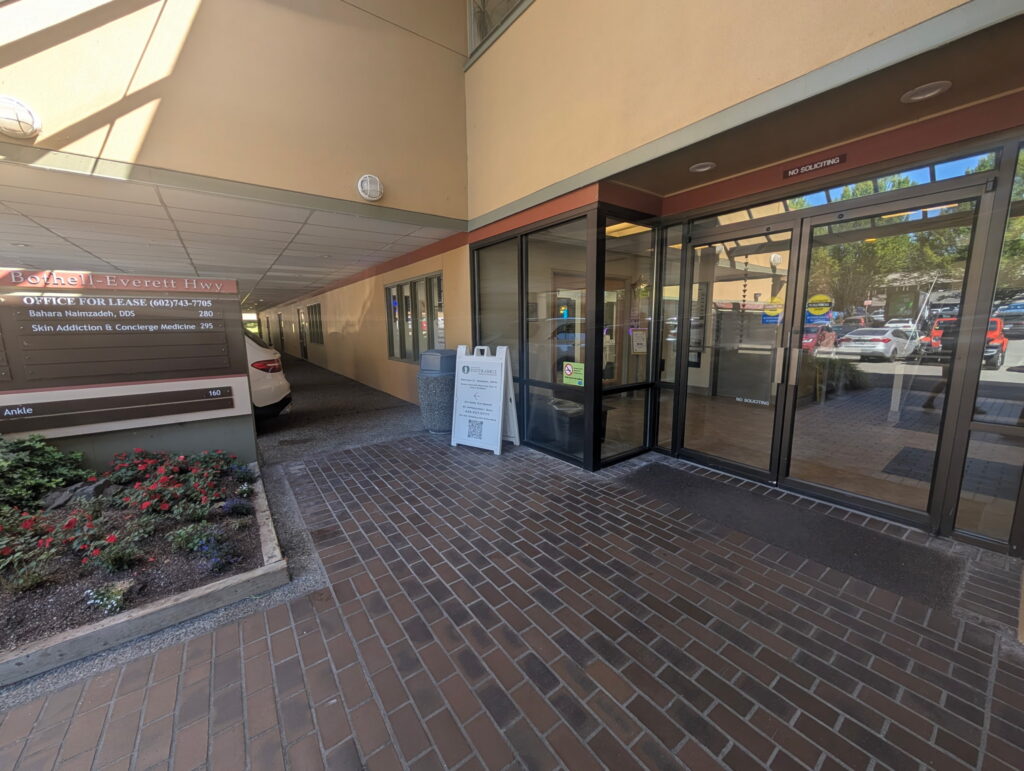
Integrative Foot and Ankle Centers of Washington, Mill Creek
16030 Bothell Everett Highway, Suite 160
View Clinic
Integrative Foot and Ankle Centers of Washington, Kirkland
13030 121st Way NE, Suite 204
View Clinic

Don’t let an ankle sprain slow you down, we’re here to help you heal.
Schedule your visit today and we’ll get you back on your feet.