
Foot Surgery: Advanced Procedures
Advanced surgical techniques for foot and ankle conditions, focused on restoring function and reducing pain.

What You Need To Know
An overview of the surgical procedures we perform and how they can help you.
Advanced Foot and Ankle Surgery
Foot surgery covers a wide range of procedures used to correct pain, deformity, or loss of function in the foot and ankle. Common foot and ankle issues may not require surgical intervention, but when problems persist your physician may recommend surgery as the most effective option for you. Surgery can help treat problems related to pain, deformities, fractures, and loss of function.
Many of our procedures use minimally invasive techniques. Minimally invasive foot surgery is done with a very small incision that requires little or no stitching. Through these small incisions, surgeons insert specially designed instruments to perform the operation. These procedures can correct many painful conditions, including bunions, hammertoes, stiff big toe, painful calluses, diabetic foot ulcerations, heel pain, and warts, and are often performed as outpatient procedures.
Arthroscopy of the ankle and subtalar joint is performed through small incisions that give full access to a joint. A telescopic camera and small tools are placed into the joint while the surgery is watched on a monitor. Advantages include smaller incisions that permit early range of motion, along with reduced recovery time, less pain, and less swelling.
Other procedures we perform include Achilles lengthening and gastrocnemius recession, ankle fusion and fusion reversal, ankle distraction arthroplasty, cartilage resurfacing, microfracture surgery, radiofrequency micro tendon ablation, and tendon transfers. If conservative care has not resolved your symptoms, we can evaluate you and discuss whether a surgical option is appropriate.
Hammertoe Surgery Explained
Recovery, Benefits, and What To Expect
Minimally invasive foot surgeries provide several benefits. There is less injury to soft tissue compared to traditional open surgery, which uses longer incisions that may create more trauma. Studies have shown that patients report less pain than those undergoing traditional surgery and require less use of pain relievers. Surgery times are often shorter, and smaller incisions leave scars that are less noticeable.
Because many minimally invasive procedures can be performed with local anesthesia to the foot, patients often remain awake during surgery. This reduces the use of general anesthesia and opens up surgical options for patients who may have been previously considered at risk due to medical history.
Recovery varies by procedure. After ankle or subtalar arthroscopy, patients are typically non-weightbearing for one to two weeks, then slowly increase activities over the next four to six weeks. After microfracture surgery, patients are typically non-weightbearing for six weeks. After gastrocnemius recession or Achilles tendon lengthening, non-weightbearing in a splint is usually needed for four weeks. In most cases we discourage placement into a cast to allow for early range of motion, which helps prevent adhesions.
For patients considering ankle fusion, you can maintain your ability to walk, and most patients can walk without any perceptible limp after fusion. Your foot and ankle specialist will review the specific plan, alternatives, and possible complications with you before surgery.
Locations Offering Foot Surgery
Find a convenient location near you for surgical consultation and care.



Integrative Foot and Ankle Centers of Washington, Kirkland
13030 121st Way NE, Suite 204
View Clinic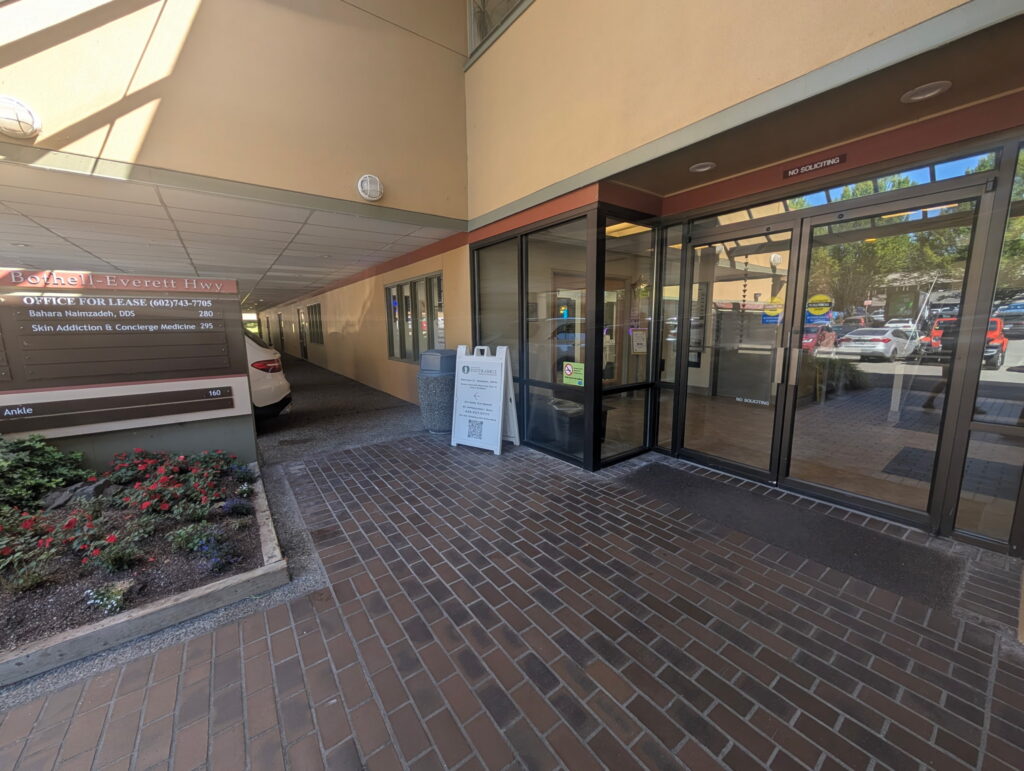
Integrative Foot and Ankle Centers of Washington, Mill Creek
16030 Bothell Everett Highway, Suite 160
View Clinic
Integrative Foot and Ankle Centers of Washington, Renton
4300 Talbot Road South, Suite 315
View Clinic
Integrative Foot and Ankle Centers of Washington, Bremerton
900 Sheridan Road, Suite 101
View Clinic

Integrative Foot and Ankle Centers of Washington, Port Orchard
1950 Pottery Avenue, Suite 120
View ClinicReady to talk with a foot and ankle surgeon? We’re here when you’re ready.
Let’s find the right surgical option for you. Schedule your consultation today.