
Total Ankle Replacement Surgery
Restore motion, reduce pain, and regain function with a modern alternative to ankle fusion for end-stage arthritis.
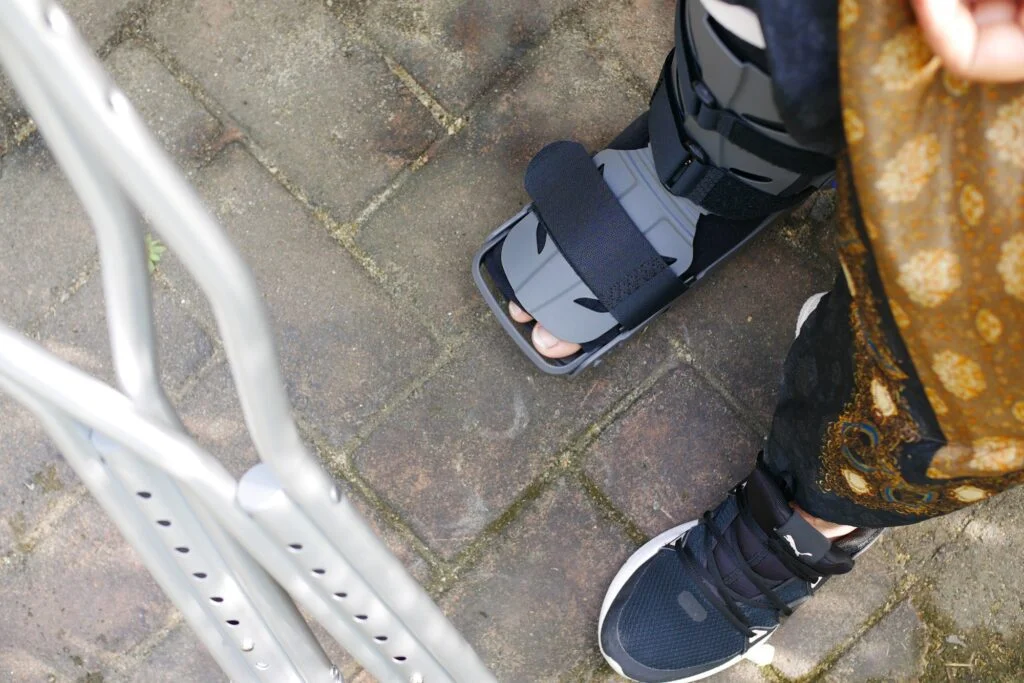
What You Need To Know
Learn how ankle replacement works and whether it may be right for you.
Understanding Total Ankle Replacement
The ankle joint is very important for normal walking and fortunately, is resistant to forming arthritis. However, if the ankle has suffered injuries, advanced arthritis can set in over time. For those patients with end-stage arthritis of the ankle (limitation of motion and/or worn-out joint surfaces), there are relatively few treatment options outside of surgery. For some patients, ankle joint replacement is a viable option.
Ankles are more likely to develop post-traumatic arthritis than osteoarthritis. For many Baby Boomers, the trauma was an ankle fracture or a bad sprain that may have happened in their teens or twenties. Symptoms of end-stage arthritis include limitation of motion and worn-out joint surfaces, which can make walking, standing, and daily activities painful.
Today, the clinical outcomes of ankle replacement are very good and more predictable. In terms of function, ankle replacement is better than ankle fusion. A fused ankle limits up and down motion of the foot on the leg, while replacement preserves motion and allows improved function. This motion also protects remaining joints in the foot from added stress.
The ideal person for ankle replacement is someone with end-stage arthritis, over 50 years of age, not involved in strenuous activities, and not too heavy. Patients with advanced diabetes, poor bone quality, or poor circulation are not good candidates. If you are experiencing pain or discomfort in the ankle region, contact us to schedule an evaluation and discuss your options.
Surgery, Recovery, and Implant Options
Dr. Jeffrey Christensen has significant expertise in this area, having performed ankle joint replacements since 2003. Currently, he has one of the busiest total ankle practices on the west coast. Dr. Christensen has performed over 700 total ankle surgeries and is heavily involved in teaching total ankle surgery to surgeons and lecturing at national and regional meetings. He also has published and is actively performing research on total ankle replacement and ankle arthritis. He is on the APEX 3D surgeon design team for Paragon28, Inc.
The surgery usually involves one night in the hospital. The post-operative course involves close monitoring at the clinic. Range of motion can be initiated after the incision is healed. Weightbearing is delayed until bone stabilization has been completed, which takes about 4 to 6 weeks.
Since 2005, several new implant designs have completed the FDA process, offering ease of placement and refined instrumentation for accuracy. Our clinic has experience with the following US designs: APEX 3D, Inbone, Infinity, Invision, Cadence, Salto Talaris, STAR, Vantage, and Zimmer Trabecular Metal.
After surgery, patients can walk, climb, hike, swim, and bike. Activities that are to be avoided include running, court sports, jumping, or heavy labor that includes lifting. The main advantage of an ankle prosthesis is the preservation of motion at the ankle, which is important for walking, hiking, bending, and climbing stairs. Patients who follow their post-operative plan can look forward to improved comfort and mobility in the years following surgery.
Where to Find Total Ankle Care
Visit one of our Washington locations to consult with an experienced ankle surgeon.



Integrative Foot and Ankle Centers of Washington, Kirkland
13030 121st Way NE, Suite 204
View Clinic
Integrative Foot and Ankle Centers of Washington, Renton
4300 Talbot Road South, Suite 315
View Clinic
Integrative Foot and Ankle Centers of Washington, Bremerton
900 Sheridan Road, Suite 101
View ClinicReady to take pressure off your ankle and get back to the activities you love?
We’re here to help you understand your options and find lasting relief.